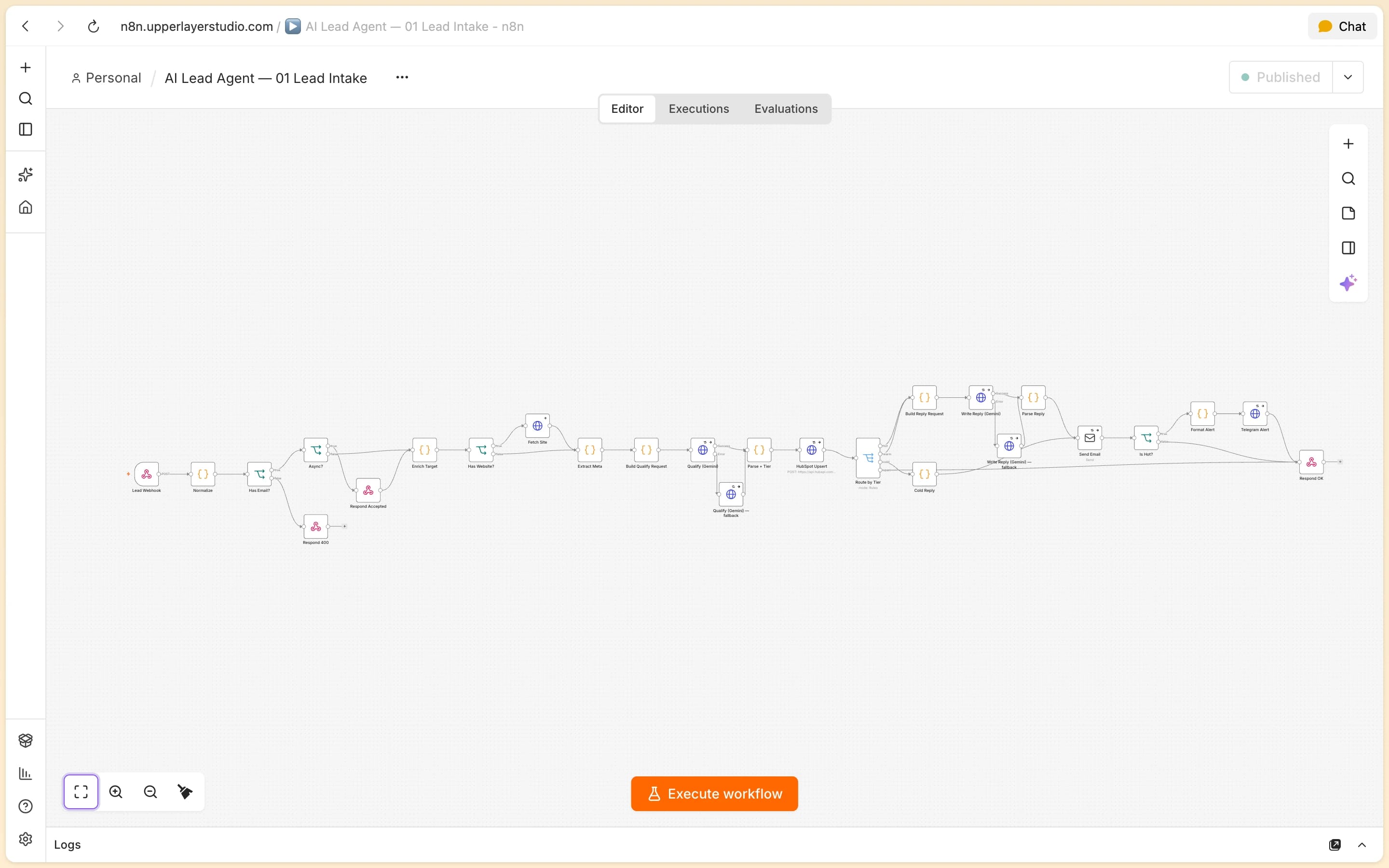
The difference matters commercially, not just technically. An automation follows a path you defined. An agent decides which path to take. One of those is predictable and cheap to run; the other needs guardrails, evaluations and a budget for the days it surprises you.
Most briefs that arrive asking for an agent describe an automation. That is good news for the person asking, because the automation is cheaper, ships sooner and breaks less often.
The test
Write down the decision the system has to make. Then ask whether you could write the rule for it on one page.
If you can, it is an automation. A quote that follows your pricing table, an onboarding that always runs the same seven steps, an invoice chase that fires on day thirty — all rules. Write them down once and they run forever, at a cost you can predict to the rupee.
If you genuinely cannot — because the input is a customer writing in free text about a problem you have never seen phrased that way — then you need something that can reason about it. That is an agent, and it should be scoped as narrowly as you can stand.
Why people reach for the agent anyway
Partly because it is the thing being sold. Partly because an agent feels future-proof: if the rules change, surely the clever system adapts?
In practice it is the reverse. When rules change, you edit an automation in an afternoon and you know exactly what changed. You edit an agent by adjusting a prompt and then you need an evaluation suite to tell you what else you broke. The flexible option is the one that costs more to change, which is not the trade most people think they are making.
Where agents genuinely win
Four situations, in my experience:
- The input is unstructured and written by a human who does not know your categories.
- The number of possible paths is large enough that enumerating them is its own project.
- The system has to read something — a document, a thread, a transcript — and decide what matters in it.
- You need it to use several tools in an order that depends on what it finds.
The honest version of the pitch
If you ask me for an agent and your problem is an automation, I will build the automation and tell you why. It is a smaller invoice and it is the right answer, and I would rather have the second project than the first argument.